Friday, January 11, 2008

Tri-City Herald: Mid-Columbia news

Hanford workers prepare for high-risk excavation of waste (w/video)

Hanford cleanup

Published Thursday, January 10th, 2008

By Annette Cary, Herald staff writer

Hanford workers are preparing to start next week digging up radioactive and chemical waste that could spontaneously catch fire when exposed to air.

"We're planning for the worst case," said John Darby, project manager for the Department of Energy's contractor, Washington Closure Hanford.

The 618-7 Burial Ground was used from 1960 to 1973 for waste from the Hanford nuclear reservation's 300 Area just north of Richland where fuel was made for Hanford's reactors and research was conducted.

Tri-City Herald: Mid-Columbia news

Wednesday, January 9, 2008

Energy Prospects - No Nukes or Coal, Idaho Petition Says

Energy Prospects - No Nukes or Coal, Idaho Petition Says
Here is a good one...help Idahoans stop the nuclear reactor expansion in their state!

Thursday, December 6, 2007

How to make uranium, in five easy steps.

Powertech Uranium, facing an extreme embarrassment, loses its wits to Coloradan opposition as shown in this timeline listed in the Rocky Mountain Chronicle.

The cartoon character sucking uranium through a straw, looks just like Mr. Blubaugh, PowerTech vice-president...evidently they read my repeated statement, posted in all their newspapers, that he should prove to us that in-situ leach uranium mining is safe by drinking some of the dissolving solution (lixiviant), then I'll believe him. Now if we could just get South Dakota to hear this same message!

Oh well!!! It really isn't about the uranium, it is really about increasing property values, and speculating on company stocks. Ever since Mr. Gore proclaimed Global Warming, the nuclear industry shills daily that their energy is safe for the environment and will start Global Cooling, formerly known as Nuclear Winter, through nuclear proliferation.

Tuesday, December 4, 2007

New Mexico Governor Calls on NRC to Abandon Generic Environmental Impact Statement for Uranium Mining Applications

Process Violates Government-to Government Consultation, Limits Public Participation

December 3, 2007 -- (SANTA FE – NM) -- In a recent letter, New Mexico Governor Bill Richardson called on the U.S. Nuclear Regulatory Commission (NRC) to abandon the Generic Environmental Impact Statement (GEIS) process for new uranium mining activities in New Mexico and across the West, citing concerns about the lack of site-specific environmental review and public participation. Under the NRC’s proposal, new uranium mining activities – and the public’s right to comment on them -- would fall principally under one single “generic” environmental impact statement rather than separate, site-specific environmental reviews.

In the letter, Governor Richardson notes that a generic approach is contrary to the principles of government-to-government consultation with sovereign Native American Tribes and Pueblos, is contrary to NRC’s duties and obligations under the National Environmental Protection Act (NEPA), and limits the ability of local communities and citizens to voice concerns regarding the specific licensing of potential operators in New Mexico.

“The NRC should abandon the “generic” process for reviewing any proposed uranium recovery operation,” said Governor Richardson. “The west is a diverse, unique, and vast area where one size does not fit all. As such, the State of New Mexico does not support the scope and approach of the proposed process."

The majority of uranium resources in New Mexico are located in the northwest portion of the state, which includes a large portion of Indian lands. Any proposed uranium recovery will pose unique cultural and environmental justice issues that the GEIS process will not adequately address. A GEIS approach looks at the bigger picture without adequately considering the specifics on the ground of each license in each location. The real concern is that down the road the NRC will rely on the GEIS as the primary environmental document and not conduct a separate, in-depth environmental review when reviewing license applications for specific sites in New Mexico.

The GEIS proposal is contrary to the State of New Mexico’s commitment to a full public participation in its state permitting process. Individual review of each permit is key for uranium operations due to the extensive history of environmental degradation and public health impacts from past uranium mining and milling practices.

“Overall, the state of New Mexico believes that the proposed generic statement is contrary to NRC’s duties and obligations under NEPA and any generic analysis will fall far short of assessing and identifying all possible environmental impacts in the western United States,” said Governor Richardson. “The State of New Mexico remains committed to an open, transparent and thorough review process of all uranium permits and we implore the NRC to commit itself to the same level of public involvement."

Governor Richardson’s letter was sent to the US Nuclear Regulatory Commission on Friday, November 30th.

Text of letter follows:

November 21, 2007
Chairman Dale E. Klein
U.S. Nuclear Regulatory Commission
Washington, DC 20555

Dear Chairman Klein:

As outlined in my letter dated July 31, 2007, the U.S. Nuclear Regulatory Commission’s (NRC) proposed Generic Environmental Impact Statement (GEIS) for newly proposed uranium recovery operations in the western United States concerns me greatly. This proposal will directly impact New Mexico, a state rich in uranium reserves but with an unfortunate history of environmental degradation from past uranium mining and milling.

The NRC’s decision to pursue a GEIS is highly questionable since it is not clear that there is a wide-ranging federal program that is concerted, systematic, and connected which would warrant the use of a “programmatic” approach as opposed to separate, site-specific environmental reviews. The State of New Mexico requests that the NRC reconsider its decision to use a GEIS approach. A GEIS results in a more “generic” review on a broader scale of general concepts without taking into consideration that there are unique issues related to specific sites within each specific geographical area.

Moreover, a GEIS often is used as a tool in the “tiering” process to serve as a master document whereby subsequent, site specific environmental reviews only amount to an environmental assessment with heavy reliance on the “generic” document. This means that instead of performing a comprehensive, in-depth environmental review at each site in New Mexico for each license application, the NRC would only conduct an environmental assessment and rely on the GEIS for a large portion of its site-specific analysis. Given the unique environmental, geographical, cultural, historical, economic, and regional aspects of New Mexico, it is contrary to the goals and purposes of the National Environmental Policy Act (NEPA) for the NRC to use a GEIS approach in this instance.

A significant issue pertains to the unique cultural and historical factors in the State of New Mexico. The majority of uranium resources in New Mexico are located in the Grants Mineral Belt in the northwestern portion of the State. This area includes large portions of “Indian Lands.” Consequently, any proposed uranium recovery and processing operations in New Mexico will pose unique cultural and environmental justice issues that the GEIS process will not adequately address.

Likewise, a GEIS unduly limits the ability of local communities and citizens to voice specific concerns regarding the licensing of potential operators in their neighborhoods and communities. Given the concerns of many citizens in New Mexico about the public health, environmental, and cultural impacts of new uranium mining actions, a process that forces the public to comment on an environmental document that only considers broad-based issues for a large regional area undermines the purposes and intent of NEPA to ensure that specific major federal actions do not adversely impact the environment. The use of a generic, general, programmatic approach instead of ensuring an in-depth evaluation at the site specific level is disrespectful of the general public’s right to have a meaningful voice in decisions of such magnitude and importance.

In addition, a “generic” approach is contrary to the principles of government-to-government consultation with the many sovereign Native American Tribes and Pueblos in New Mexico. Some thirty-five Native American tribes claim cultural affiliation with historic properties in New Mexico, including archaeological sites, landscapes, traditional cultural properties and sacred sites. In many cases, traditional Native American cultural properties consist of cultural landscapes and special landforms with spiritual relationships that could be affected by this proposed undertaking having long-term adverse impacts or potentially detrimental effects to the very existence of the people.

Potential impacts on New Mexico’s sovereign Tribes and Pueblos will undoubtedly result in a “finding of significant impact” in the National Environmental Policy Act (NEPA) evaluation, which will require the NRC to perform an Environmental Impact Statement (EIS). In this context, the NRC should abandon the GEIS process and adopt the full Environmental Impact Statement (EIS) process for reviewing any proposed activity that will occur at specific sites within our state. A full EIS process will give the state and the public the opportunity to address site-specific and cultural concerns unique to proposed operations in New Mexico. While the NRC may claim that site specific evaluations will occur with each license application in New Mexico at a later stage, there is no guarantee that such evaluations will be beyond an environmental assessment.

The GEIS proposal also is contrary to the State of New Mexico’s commitment to full public participation in its state permitting process in which each permit is evaluated on a case-by-case manner. This individual review is particularly important for uranium operations due to the extensive history of environmental degradation and public impacts as a result of past uranium mining and milling practices, the varying hydrologic, geologic, and ecologic conditions of each particular site, and cultural resources unique to New Mexico. A full EIS process is also consistent with the NRC’s decision to complete an EIS for new nuclear reactor applications rather than following a GEIS process.

Unlike the Navajo Nation, the State of New Mexico currently has not taken a broad policy position on uranium mining. However, if uranium mining and milling are to resume in New Mexico, the state must be sure that the public is given a robust opportunity to participate in the decisions and that all environmental, water resource, and potential public health issues are thoroughly examined for each operation. The State of New Mexico is committed to an open, transparent and thorough review process of all uranium permits and we implore the NRC to commit itself to the same level of public involvement.

Overall, the State of New Mexico believes that the proposed GEIS is contrary to NRC’s duties and obligations under NEPA and that the generic analysis of the proposed action of “construction, operation, and decommissioning of an ISL uranium mill” will fall far short of assessing and identifying all possible environmental impacts in the western United States. The west is a diverse, unique, and vast area where one size does not fit all. As such, the State of New Mexico does not support the scope and approach of the proposed GEIS.

Lastly, the State of New Mexico wishes to reiterate the importance of holding public meetings in affected communities on an ongoing basis. Such meetings are vital to the public participation process. The meetings held in August and September earlier this year were helpful and productive in establishing a dialogue with the NRC and we hope that the NRC will continue to hold such meetings in the future.

Please submit these comments as part of the official record regarding this matter. I hope that the NRC will weigh these comments heavily and provide the public with a genuine opportunity to review and evaluate individual EIS’s for all proposed in situ leach (ISL) and conventional mill operations in New Mexico.

Sincerely,
Bill Richardson
Governor of New Mexico
cc: Chief, Rulemaking, Directives and Editing Branch
Mail Stop T-6D59
U.S. Nuclear Regulatory Commission
Washington, D.C. 20555-0001

Source: New Mexico Governor

Friday, November 16, 2007

Uranium Impacts Native and non-Native Seek Justice

Bluewater Valley Downstream Alliance ? Church Rock Uranium Monitoring Project

Eastern Navajo Diné Against Uranium Mining ? Laguna Acoma Coalition for a Safe Environment

Navajo Uranium Radiation Vicitms Committee

New Mexico Environmental Law Center ? Post '71 Uranium Workers Committee

Sierra Club Environmental Justice Office ? Southwest Research and Information Center

Press Release

For More Information:

Thursday Nov. 15, 2007

Mitchell Capitan, 505-786-5209

Linda Evers, 505-287-2304

Candace Head-Dylla, 505-401-4349

Chris Shuey, 505-262-1862

Robert Tohe, 928-774-6103

Grass-roots and nongovernmental organizations

seek justice for uranium impacts in meetings with members of Congress

WASHINGTON , DC — Representatives of grass-roots groups and nongovernmental organizations from New Mexico and Arizona told members of Congress last week that they want a federal moratorium on new uranium development in the region until the widespread environmental and public health damages from past mining and milling are resolved and workers and communities are fully compensated.

The organizations were in Washington, D.C. to participate in the Navajo Uranium Roundtable sponsored by Rep. Tom Udall of New Mexico, and co-hosted by Rep. Jim Matheson of Utah, Rep. Rick Renzi of Arizona, and Navajo Nation President Joe Shirley, Jr.

The groups, which represented communities in the Eastern Navajo Agency, Acoma and Laguna pueblos, and the Milan and Grants area, supported the Navajo Nation's requests for funding to clean up hundreds of abandoned mines in Navajo communities, fully compensate uranium workers, conduct health studies in uranium-impacted communities, and honor and respect the Navajo Nation's 2005 law banning uranium mining and processing in Navajo Country.

Speakers for the grassroots groups joined President Shirley, other Navajo Nation officials, and Laguna Pueblo Governor John E. Antonio, in calling for a federal moratorium on new uranium mining.

Mitchell Capitan, founder of Eastern Navajo Diné Against Uranium Mining (ENDAUM), based in Crownpoint, said the Nuclear Regulatory Commission (NRC) is "tilted toward industry" and cannot be trusted to properly regulate uranium in situ leach (ISL) mines and new uranium mills. He charged that the NRC did not give fair consideration to ENDAUM's technical and legal arguments challenging NRC's 1998 licensing of Hydro Resources, Inc.'s (HRI) proposed ISL mines in Churchrock and Crownpoint. To illustrate his point, Capitan provided copies of a photo from the NRC's web site showing agency officials smiling and shaking hands with executives of a Wyoming uranium company, which had just submitted an application for a new ISL mine — long before the proposed facility is subjected to NRC staff review and approved by the Commission.

Larry J. King, an ENDAUM member and Churchrock Chapter resident, said his community recommends a federal uranium mine clean-up program that would address legacy sites throughout the West. He also called for Congress to force NRC to return to its mission to protect public health and safety. He cited an NRC ruling in 2006 that classified high levels of radiation from mining wastes at a proposed ISL site across the highway from his home as "background" radiation.

Robert Tohe, environmental justice organizer for the Sierra Club in Flagstaff , Ariz. , said Congress should give federal land management agencies the authority to deny exploration and mining permits on Native American sacred sites and in sacred places. He noted that several mining companies are exploring for uranium on and around Mt. Taylor , one of the four sacred mountains of the Navajo people and a sacred place for Acoma and Laguna pueblos.

Long-time Diné uranium worker advocate Phil Harrison, Jr., who is now a delegate to the Navajo Nation Council, and attorney Keith Killian of Grand Junction , Colorado , called on Congress to amend the Radiation Exposure Compensation Act (RECA) to address disparities in compensation awards between Native Americans and non-Indian uranium workers and downwinders. They said the range of compensable diseases should be expanded and attention given to the lack of compensation for dependents of former workers and people who lived, and still live, in mining-impacted communities.

Harrison, Paguate resident Alvino Waconda, and Milan residents Linda Evers and Liz Lucero, all of whom are former uranium workers, supported amending RECA to include people who worked in the uranium industry after 1971. Evers said her group has collected nearly 1,500 surveys of post-1971 uranium workers, and that the vast majority of workers are reporting a wide range of cancers, respiratory diseases and kidney disease. Evers said she expects to report the first results by the end of the year.

Milan residents Candace Head-Dylla, Milton Head and Art Gebeau, representing the Bluewater Valley Downstream Alliance (BVDA), handed out information packets showing how groundwater contamination around the Homestake Uranium Mill north of Milan has spread to three aquifers covering several miles of land since first detected in 1961. They said the plumes contain high levels of uranium and other toxic substances and are inching toward Milan 's municipal water wells, yet no groundwater monitoring is being conducted ahead of the contamination plume. Dozens of private wells in communities near the mill have been shut down, but until very recently some residents were unknowingly still drinking tainted water from private wells, the BVDA members said. They recommended that Congress should amend federal laws, such as the Clean Water Act, to ensure that that uranium mine and mill wastes and associated discharges are regulated as toxic pollutants.

The grass-roots people were assisted by staffs of Southwest Research and Information Center , Natural Resources Defense Council, the New Mexico Environmental Law Center , Earthworks, and The Raben Group. A list of major policy objectives advocated by the groups follows.

Dr. Johnnye Lewis, a University of New Mexico toxicologist who was invited by the Navajo Nation and Udall staffs to provide scientific guidance, spoke to the need for a comprehensive health study, noting that the lack of health data is often misconstrued as a lack of effect. Dr. Lewis, who is the principal investigator for the first community-based health and exposure study in Navajo communities, emphasized the need for health studies to be conducted by independent investigators to ensure the validity and scientific integrity of results.


GRASS-ROOTS AND NONGOVERENMENTAL ORGANIZATIONS'

RECOMMENDATIONS FOR FEDERAL RESPONSES TO THE URANIUM MINING LEGACY AND PROPOSED NEW URANIUM DEVELOPMENT ON THE NAVAJO NATION AND THROUGHOUT THE FOUR CORNERS AREA

1. Seek legislation to impose a federal moratorium on new uranium development until environmental pollution from previous mining and milling is cleaned up, workers are appropriately compensated, and community health studies conducted.

2. Amend the Radiation Exposure Compensation Act (RECA) to, among other things, include certain New Mexico counties in the areas exposed to fallout from nuclear weapons testing, expand the universe of compensable diseases for uranium workers, and extend eligibility for compensation to workers who worked after 1971. Congress should also investigate compensation strategies for dependents of former uranium workers and for residents of communities impacted by uranium development.

3. Respect and protect the Navajo Nation's sovereign right to enact the Diné Natural Resources Protection Act (DNRPA) of 2005, which prohibits uranium mining and processing by any means anywhere in Navajo Country.

4. Ensure full funding for health studies among residents of communities impacted by uranium mining and milling, and restore cuts in existing studies.

5. Require the Nuclear Regulatory Commission to drop work on the proposed Generic Environmental Impact Statement for uranium in situ leach mining and to return to full and fair implementation of its statutory authority to protect public health and safety.

6. Amend the Clean Water Act, Safe Drinking Water Act, and Atomic Energy Act to make clear and certain that uranium mill and mine wastes are defined as "pollutants" and are subject to the same level of regulatory control and scrutiny as all other pollutants. Uranium mine and mill waste should not be exempt from any federal public health or environmental statute.

7. Enact a comprehensive federal abandoned uranium mine clean-up program, including funds for cleanup of abandoned mines on the Navajo Nation, Laguna Pueblo and throughout the Four Corners Area. Ensure that financially viable companies are held responsible for cleaning, or paying for cleanup, of the mining and milling sites they abandoned.

8. Reaffirm the principal of religious freedom by authorizing federal land management agencies to deny exploration, mining and milling permits on sacred sites or in sacred places, including and especially Mt. Taylor in northwestern New Mexico .

*****

Tuesday, November 6, 2007

Public Meeting about Abandoned Uranium Mines in the Cave Hills Area

Defenders of the Black Hills

P. O. Box 2003, Rapid City, SD 57709

Nov. 6, 2007

Public Service Announcement

“Public Meeting about Abandoned Uranium Mines in the Cave Hills Area”

On Tues. Nov. 13, 2007, the US Forest Service will hold a meeting in Ludlow regarding the abandoned uranium mines in the Cave Hills area at Riley Pass. The meeting is for the public and will be held in the Ludlow Hall from 5-8:00 PM.

Representatives from Tronox, formerly Kerr-McGee, the mining company that dug the uranium mine at Riley Pass will be there as well as representatives from SD School of Mines and Technology.

We encourage as many people as possible to attend and question how and when all of the 89 mines are going to be cleaned up, the health concerns from no cleanup after 30 years of leaving the mines exposed, possible destruction of more burial and sacred sites in the cleanup process, and how much taxpayer dollars are being used for the cleanup.

For more information call (605) 399-1868, or email: bhdefenders@msn.com

Monday, November 5, 2007

South Dakota ISL uranium mining: Now you see it, now you don't

Einstein once said that nuclear reactors are terrible ways to boil water; I say that poisoning water to mine uranium and promote nuclear energy is even more dangerous since we cannot easily see radioactive poisoning and heavy metal groundwater contamination especially if it is buried deep underground.


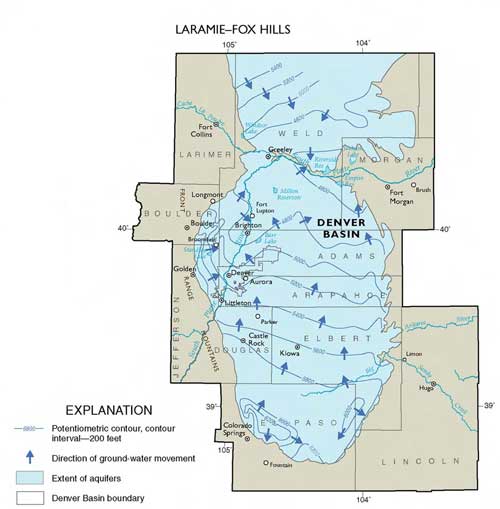
My purpose in this blog post is continue my drive to inform the rest of this country about the dangerous situation developing in South Dakota over in situ leach uranium mining. Continuing in this, there are several factors I consider very important background information before delving into this situation with me: (1) the groundwater hydrology in South Dakota hasn't been fully mapped as it has in Colorado where the direction of groundwater flow has been illustrated beautifully; (2) as a volunteer researcher for the Defenders of the Black Hills I attended the first meetings with the State of South Dakota over uranium mining permitting regulations and PowerTech Uranium's application to conduct exploratory drilling in Fall River county where I can only felt that we experienced racism, outright bigotry and environmental injustice from state officials; and (3) our verbal comments as well as those submitted in writing were largely passed over in favor of PowerTech Uranium and its cohorts attending with them, Energy Metals (currently mining in Wyoming), and Crow Butte Resources (currently mining in Nebraska).


Current concerns and fears I share about in situ leach uranium mining are below blockquoted from http://en.wikipedia.org/wiki/In-situ_leaching#Controversies


The concerns of environmental groups and landholders centre around;


  • Acidification of groundwaters

  • Mobilisation of potentially hazardous heavy metals and, in the case of uranium, radioactive heavy metals.[6]

  • Disturbance of the groundwater table, mixing of groundwater aquifers and general disturbance of the land atop the ore body

  • Destruction of habitat for stygofauna and other rock-inhabiting organisms, bacteria, et cetera.

  • Potential spills of acidic and metal-bearing or salt-bearing leachates upon the surface


As illustrated below, in situ leach uranium mining can experience several dangerous failures that are impossible or very difficult to remediate when these failures occur:


Although in-situ leach uranium mining is supposedly safe, I contend that it isn't, After reading published reports from the US Nuclear Regulatory Commission and existing controversial conditions reportedly resulting from in-situ leach uranium mining in Texas, Wyoming, and New Mexico as well as Australia and Russia, I should think that modern science could find a different means to generate electricity, other than using coal, uranium, gas, oil or hydropower.


For starters, the restoration process, technically named a groundwater sweep, at an in situ leach uranium mine uses reverse osmosis (RO) where high pressured water called the pore volume (the actual displacement yield of the well field) is injected back through the contaminated ore zone and extracted through another well head pump, then passed through a filter that usually clogs with the contaminated liquid during the first pass. This contaminated material is then removed from the filter and clean water is then repeatedly injected into the ore body until a certain groundwater standard has been achieved, usually pre-mining water quality standards.


The first critical subject to note is as quoted in NUREG/CR-6870:


The concentrate liquid waste from the RO units is either fed to evaporation ponds, injected into deep disposal wells, or dried for disposal at a licensed facility.


The waste is highly radioactive and emit high concentrations of radon to the atmosphere while also having the extreme possibility of escaping into the environment during catastrophic storms or acts of terrorism or through negligence. Disposing of this contaminant into deep disposal wells is just as dangerous since we don't really understand what happens down there yet but "out of sight, out of mind" seems to be valid science acceptable to the NRC.


Another important aspect that the NUREG states is that often the groundwater sweep doesn't remove all of the lixiviant, requiring another process of injecting more poisons (hydrogen sulfide, sodium hydrosulfide, or alkaline solutions) into the earth to stabilize the lixiviant to keep it from continuing to react with the ore body, thereby increasing the levels of uranium in the groundwater. But injecting these other poisons into the groundwater is acceptable to the NRC if it is within the pre-mining groundwater quality standards as measured by pH ratios yet this doesn't mean that it is any better because now its chemical composition is radically different.


NOW as I am finished with this, knowing that you are fully aware of my small perspective on the bigger picture as this form of toxic uranium mining, you must agree that uranium mining in all forms is dangerous to us, to all of us! Call your local congress representative, have them start investigating why uranium mining is allowed to continue in this country although the facts remain that it is very dangerous and toxic. Support all of the groups I have listed in the right sidebar!